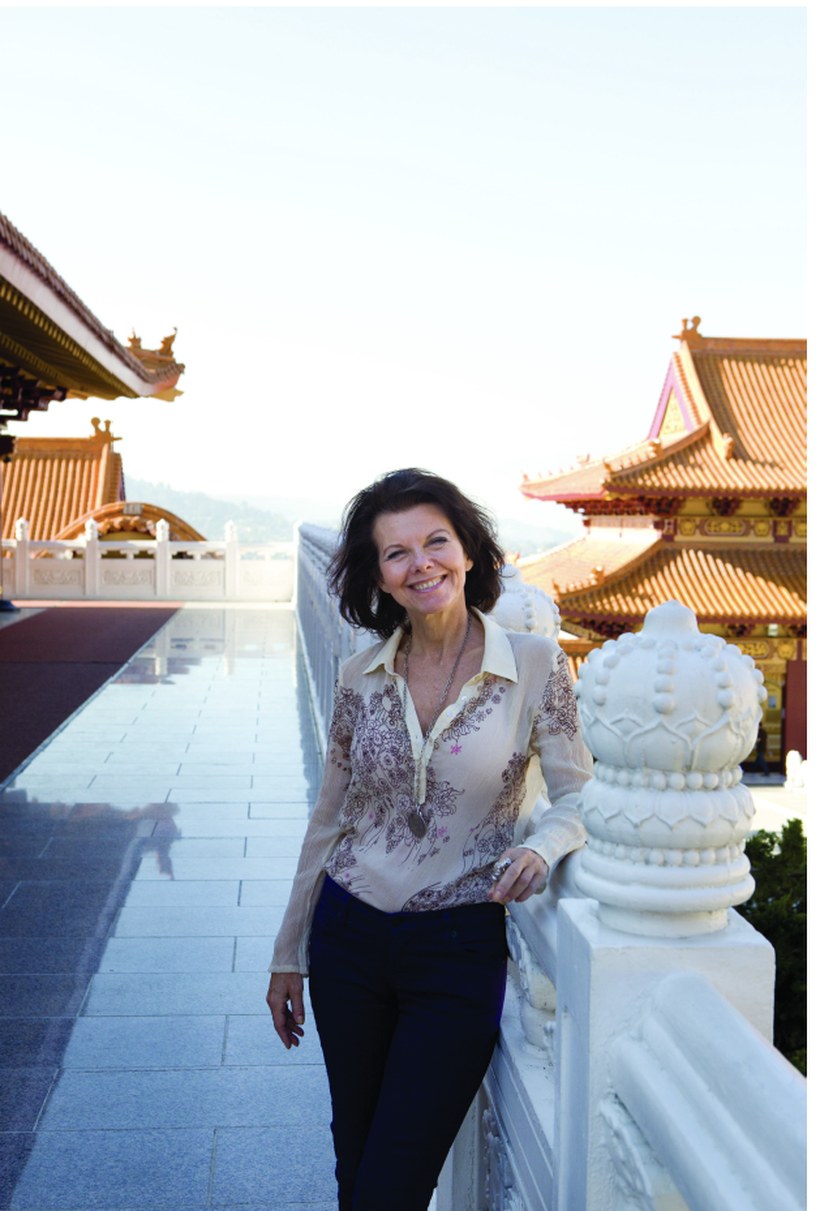
Photographed for Tricycle, "This Buddhist Life," Summer 2013.
An eclectic writer, entrepreneur, polyglot and multicultural vagabond. Novels and screenplays, mostly. Along the way I have produced films, sold rights in five languages, and started a technology company more or less by accident. I have never once been bored.
The short version
Novelist.Siddhartha: The Warrior Prince, published across France, Germany, Spain and Latin America. The first literary novel on the life of the Buddha, and the recipient of the Society of Writers UN Award of Excellence.
Graphic novelist.Crypto: L'argent du futur, published by Le Lombard, which won the 2019 Prix Lycéen from the French ministers of economy and of culture as the best non-traditional tool for teaching economics.
Screenwriter. Feature films and series, currently TOUSSAINT, TRIPLE MOON and ROULETTE.
Producer and rights seller. I started with Alexander Salkind on Superman as an assistant and ended up running Balfino AG as General Manager, selling the Salkind library worldwide. After that I was Representative Director of Atalanta Films Japan in Tokyo. I set up Posers at Miramax with Penelope Spheeris attached to direct.
Founder & Chief Executive of The Archivum. A vault of sealed video testaments by the people who shaped the century, to be broadcast within thirty-six hours of their deaths. Walter Cronkite and Pierre Salinger were our senior advisers, and Jane Chaplin, daughter of Charlie Chaplin and Oona O'Neill, a shareholder. Nine recordings went into the vault.
Founder. ZING Technologies, which developed LingoZING and the LegendHQ platform, adding character voices and interactivity to comics and manga in many languages. Two patents, more than forty publisher relationships, and roughly 320 titles produced in five languages.
Languages. I work in English, French, German, Italian and Russian. This is less impressive than it sounds.
Based in Vienna. Frequently, and cheerfully, elsewhere.
What I am working on now
I have always been drawn to multi-layered stories, and particularly to people who had to fight or think their way through extraordinary odds. Through everything else I kept writing: a few scripts for hire, most of the rest out of uncontrollable need, a great many extended treatments and one novel that refused to be put down. These are the ones that matter now.
Toussaint
Feature film. Written by me. Sole rights holder.
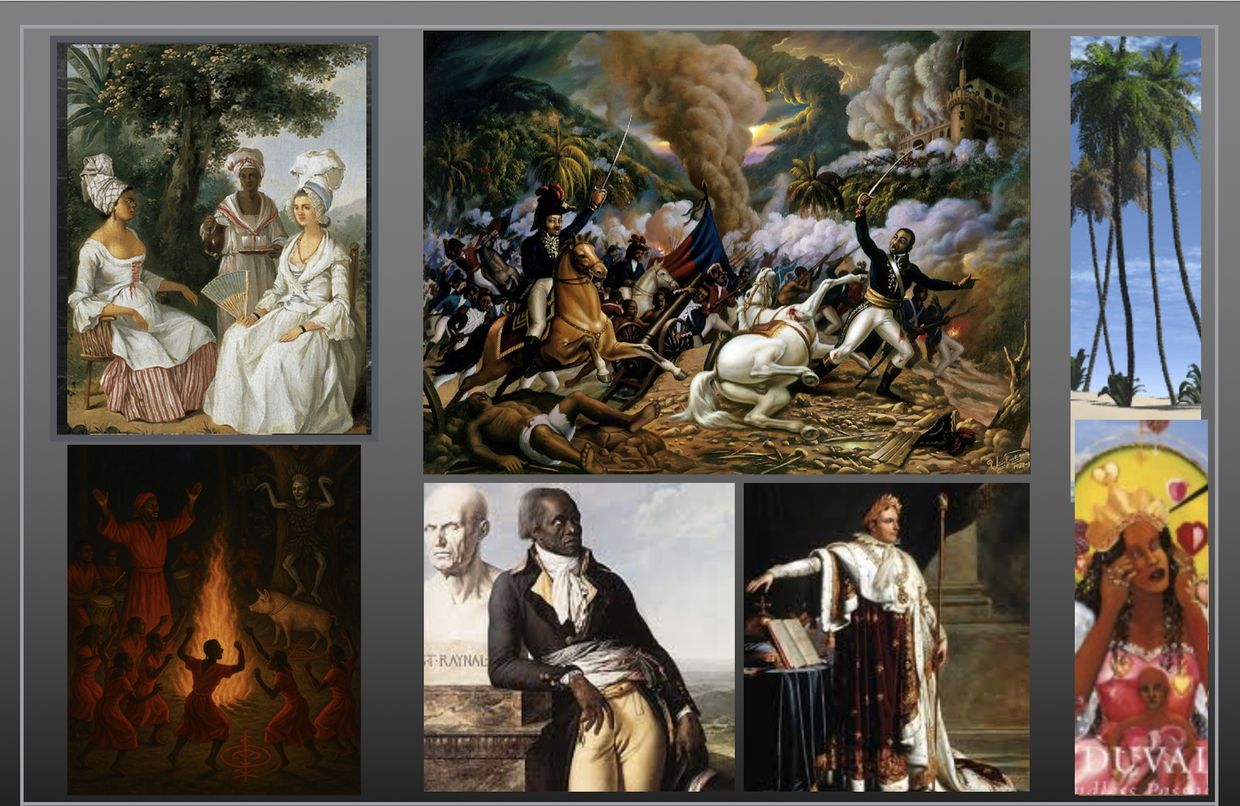
Toussaint Louverture forced Napoleon's army to withdraw, ended slavery in Saint-Domingue, and then very nearly got written out of the story. This is the film about the man himself: a prestige historical epic, twenty years of research and travel behind it, now moving into production with a French co-producer and a sales agent attached.
Everything collides at once: Catholicism against African religion against France's new atheism, warfare driven by the financial value of sugar and the coffee bean, and Machiavellian politics on an international scale.
My father talked about Toussaint Louverture constantly, so the film is his legacy as much as it is mine, and I have fought for it the way I have fought for everything, which in this case means twenty years and counting. What drew me is what drew me to the Buddha. Toussaint's actions redrew the geopolitical map, and the Buddha's words handed the world an entire philosophy about letting go, which has taken hold everywhere except Beverly Hills, where nobody has ever managed to let go of a storage unit.
Saint-Domingue: the salons, the island ceremonies, the war, and Napoleon.
Financing is under way. Let me know if you have any questions.
Toussaint is being produced by KOC in France with Jean Mach, alongside Gregory Monfort's tokenized ACE fund, and I am in active discussions with the Oscar-winning Euzhan Palcy to direct.
Feature film. Written by me. The sequel to Toussaint.
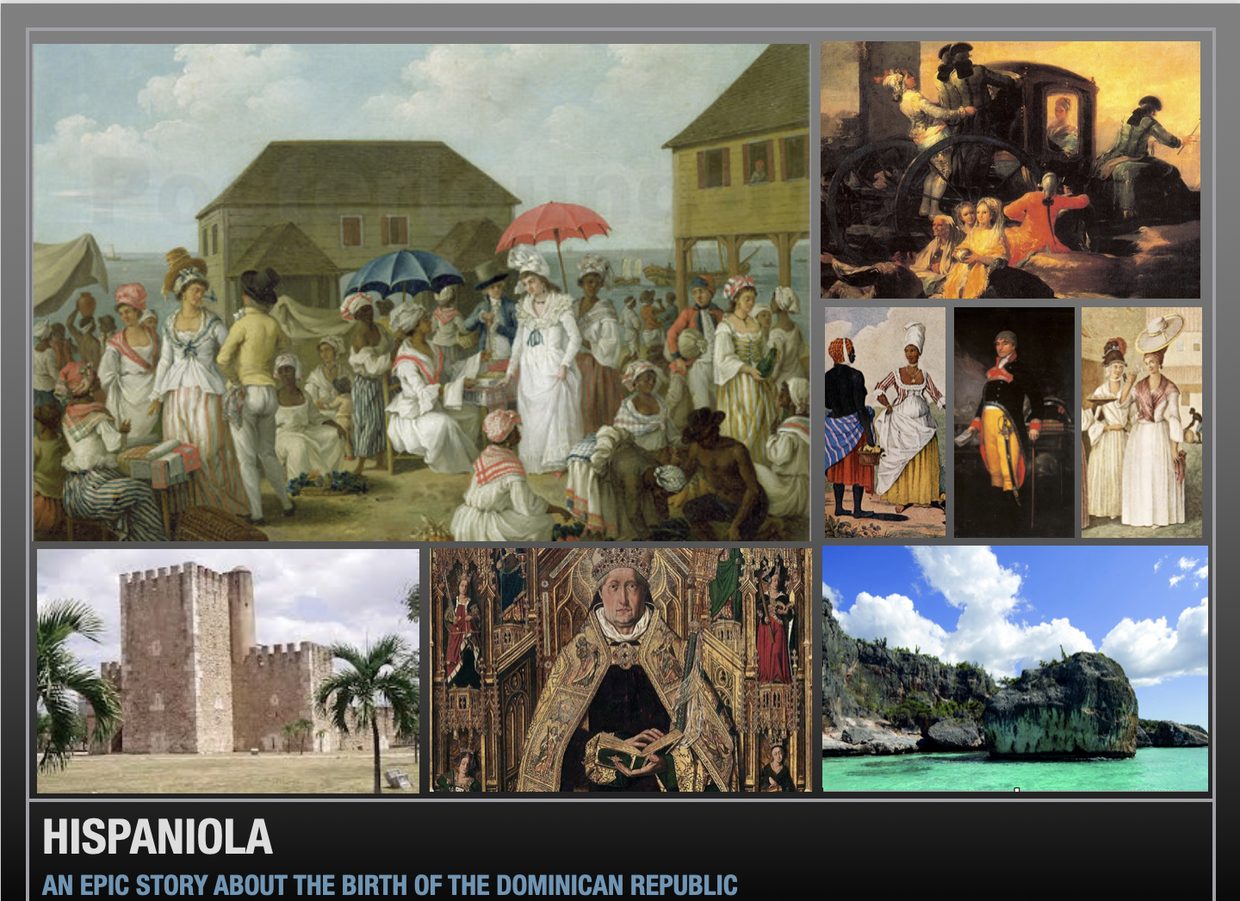
I went to Santo Domingo to put together a production deal for Toussaint and came back with a second film instead. The history of that side of the island runs in parallel with Toussaint's own years: the same events, the same decades, seen from the other side of the coin, with a story sitting inside them that I had not known was there.
The same collisions run through it. France and Spain, each inflamed to defend and preserve its own cultural identity, and on one small Caribbean nation the conflict between shades of colour. All of it seen through the eyes of a young working girl whose life is shaped by events immeasurably larger than she is, and who is caught between the unwanted obsession of a powerful man and her blind love for the wrong one, until the day she becomes whole unto herself.
It tells the events that brought Santo Domingo to independence, and so the story of two populations claiming their country on the same island and dividing it between them.
An epic about the birth of the Dominican Republic.
Triple Moon
Feature film. Written by me.
A crime thriller built on a Greek tragedy. Two people, John and Diana, recognise each other on sight as the missing half of one soul, which is Plato's idea and a good deal older than Plato. Their love is then interrupted by Spiros, a jealous suitor, who is accidentally killed by the hero. What interests me is everything that comes after, in a world that has quietly decided crime is a legal question rather than a moral one: if you are found innocent then there was no crime, not in law and not in your own heart either. Greek tragedy never believed that for a second, and neither do I.
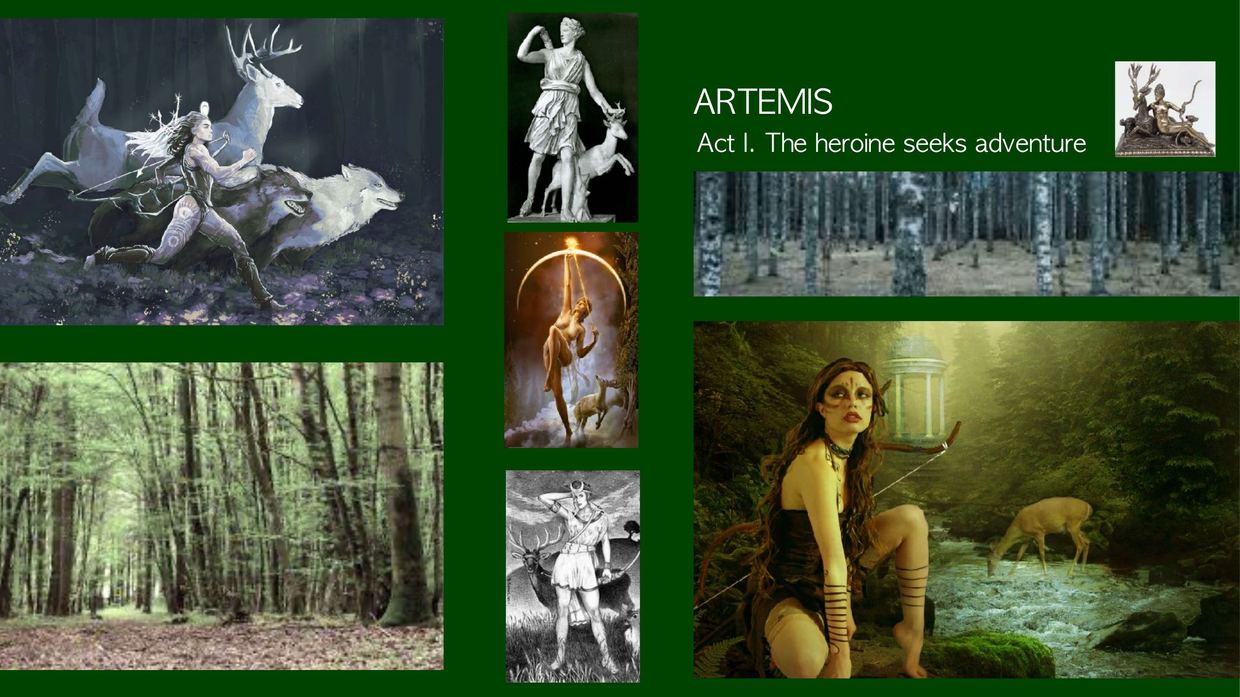
The moon has three faces, and so does the film. Each act belongs to one of them.
Act one. Artemis, the huntress. The heroine goes looking for adventure.
A Greek family still bound to the old world collides with the Anglo-Saxon present, and neither side will grant that the other might be right. Who is to say which of them is? The same fault line runs between the generations as well, between Maria, Spiros's sister and a cop, and her mother, which is where these things usually do the most damage.
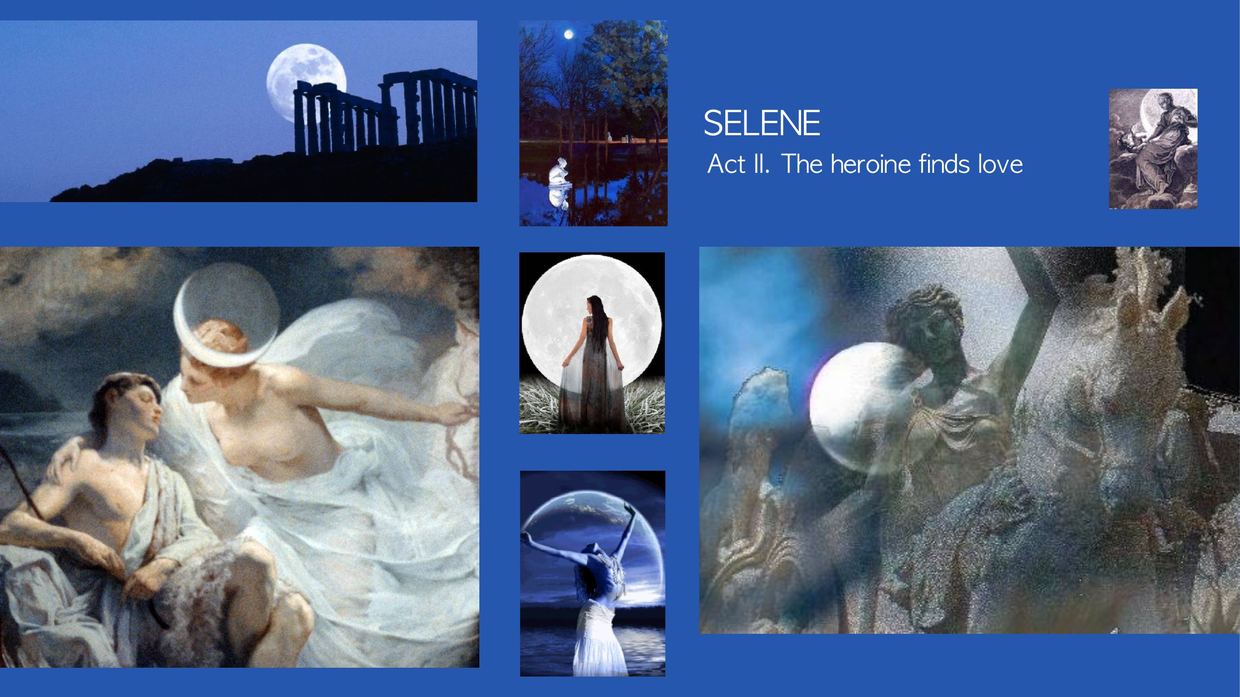
Act two. Selene, the romantic. The heroine finds love.
They know each other immediately. The difficulty is that a perfection like that is safe only until it has to answer to the morals of the people holding it, and it does. Thou shalt not covet thy neighbour's wife is not an arbitrary rule, and the film is an argument about why going against the ordained disturbs the natural order of a life.
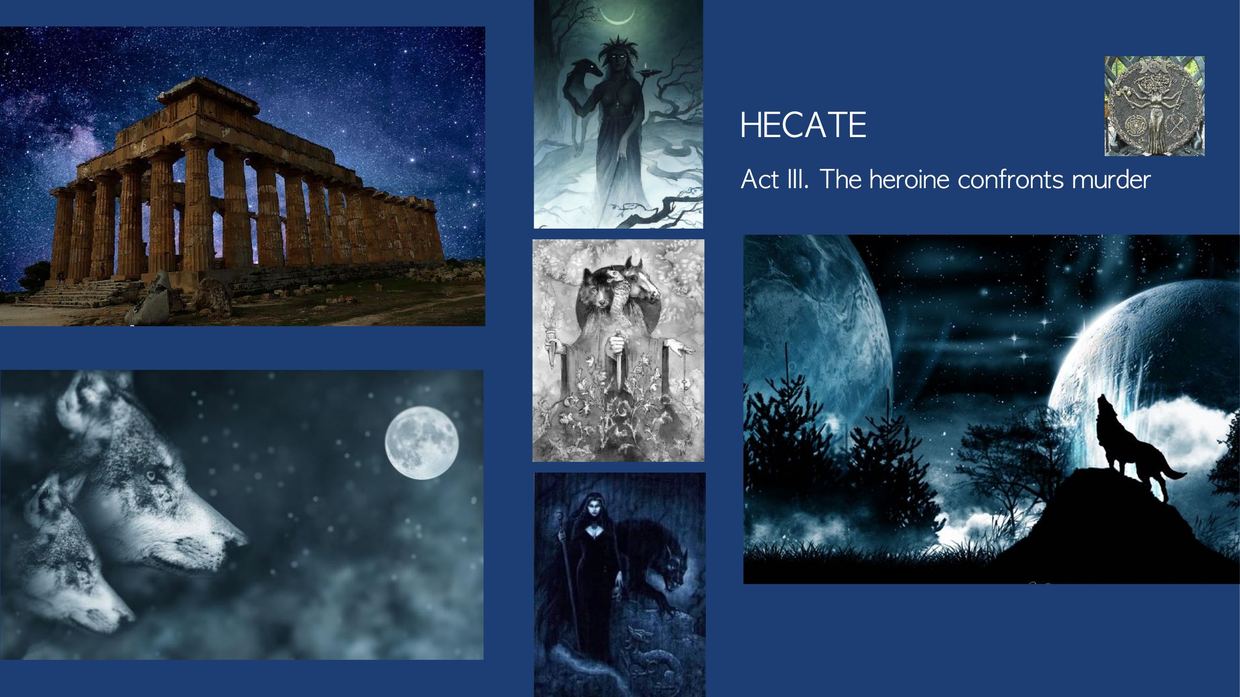
Act three. Hecate, the dark. The heroine confronts murder.
English law once made special provision for crimes committed under certain phases of the moon, which is Hecate's territory. Here the heroes are vehicles of a fate that was always going to arrive, and they pay for it dearly, which is what calls for compassion rather than judgement. Then, in the middle of the despair, they find a way through and take it. That is what earns them our support instead of our pity. Romeo and Juliet taking Adam and Eve's journey, and finding redemption in the third act.
I wrote it in Los Angeles, as everything on television is a legal drama in which people, innocent or guilty, walk free through a loophole. All of it concerns the external law. None of it concerns inner punishment, or guilt, or what a person quietly does to themselves afterwards. Then somebody asked me to write something set in Greece, and since I have loved mythology my entire life, the whole thing arrived at once.
The visual language owes everything to Cocteau. Cinema is drowning in effects that carry no symbolic weight whatsoever, and I wanted very few of them, each one meaning something.
It would have been made, were it not for the 2008 financial crisis. With AI it is now the next film I intend to make.
Countess Tarnowska
Feature treatment. Written by me.
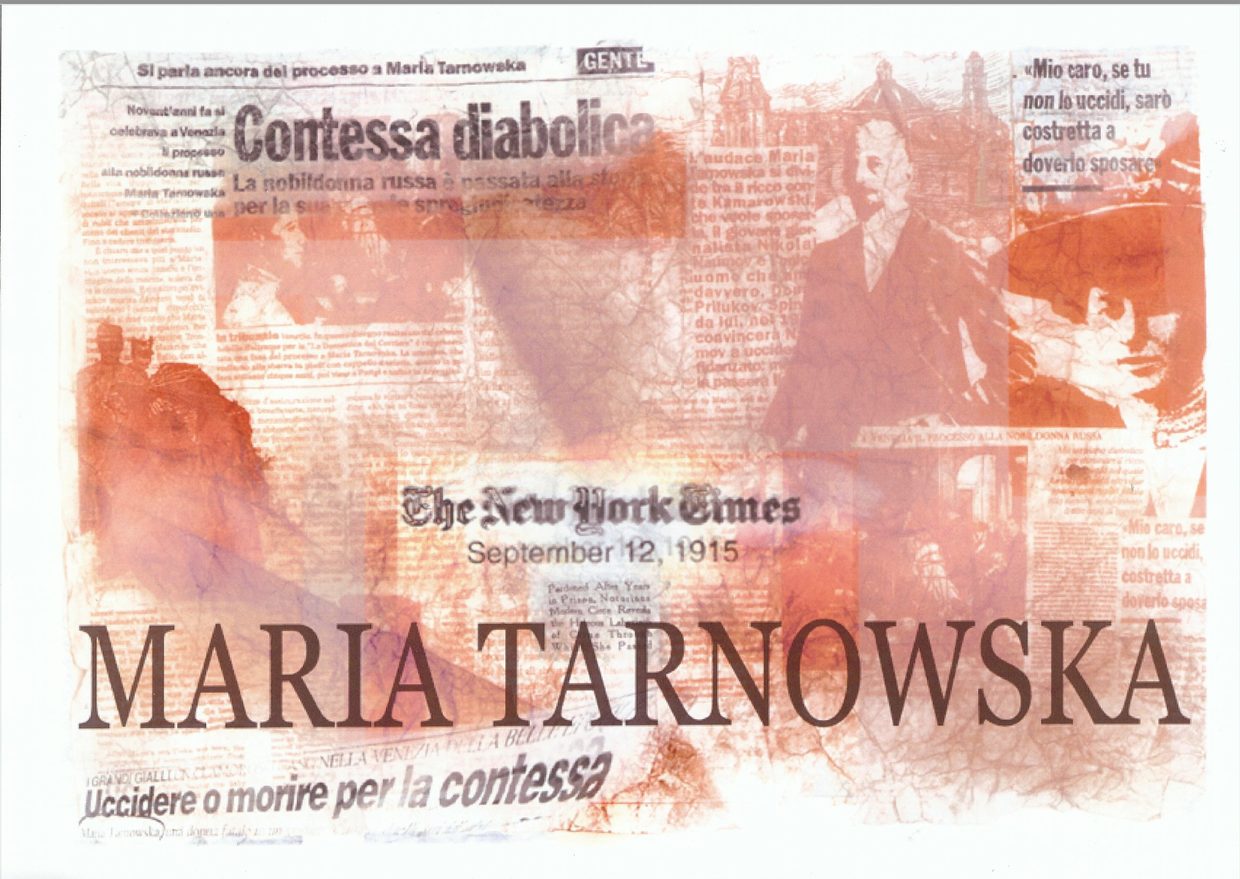
At the turn of the last century a Russian countess, enigmatic and by every account impossible to look away from, persuaded two of her lovers to work together and kill the man she was about to marry. All three were arrested in Venice.
Maria Tarnowska, in the press of her day and ever since.
Her name was Maria Tarnowska, the dead man was Count Kamarovsky, and it happened in Venice in 1907. The trial that followed was the largest of its day, and it did something that had never been done before. The court sent for the new science of psychiatry, because nobody in the room could otherwise account for why any of these people had behaved as they did. That is why I wanted to write it. It is a murder story in which the interesting question is not who did it, since everybody knew, but what on earth was going on inside them, asked at the exact moment in history when we first had a vocabulary for asking.
It was the first time the psychological profile of the female sadist was examined as a case, and that is what caught me: the extraordinary effect she had on the people around her, and the cycles of manipulation she built and rebuilt. Working through her inner journey I kept thinking of Helen of Troy, and of what it must actually feel like to live inside that much desire and that much envy purely on account of how you look.
The Italian press has never quite let her go, and it is more than a century since the verdict.
Sanctuary
Feature film. Written by me. Extended treatment and full package.
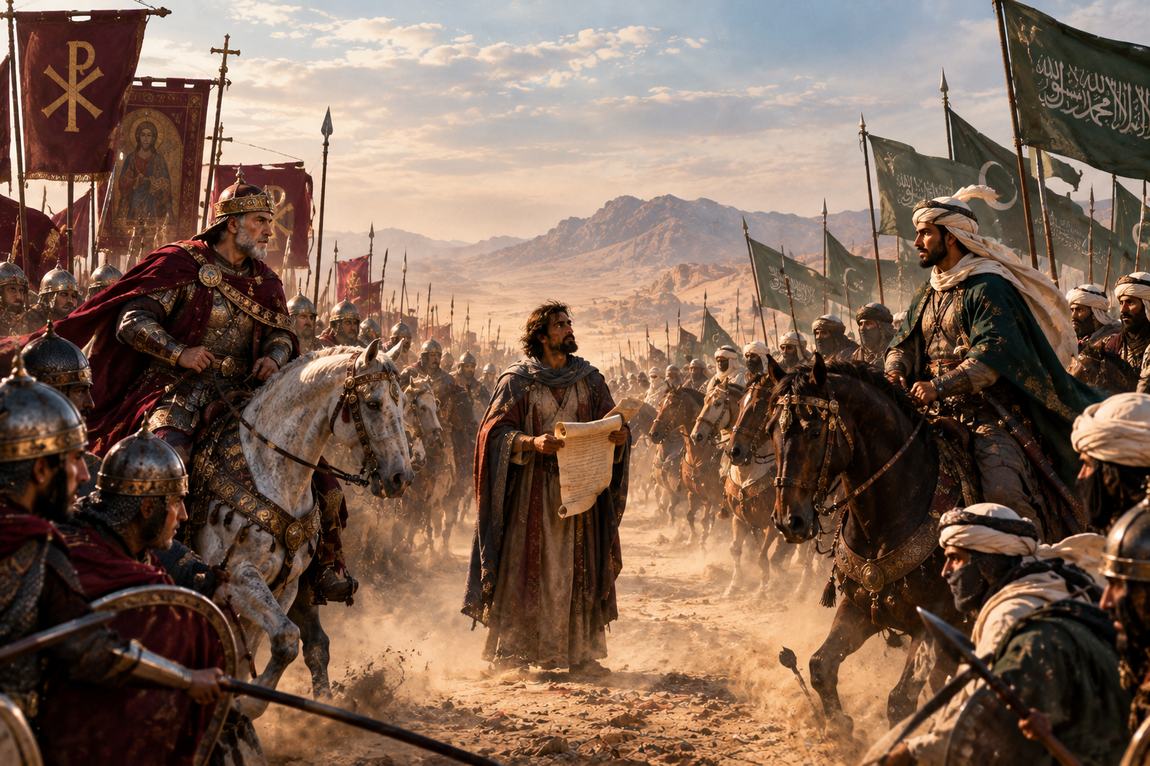
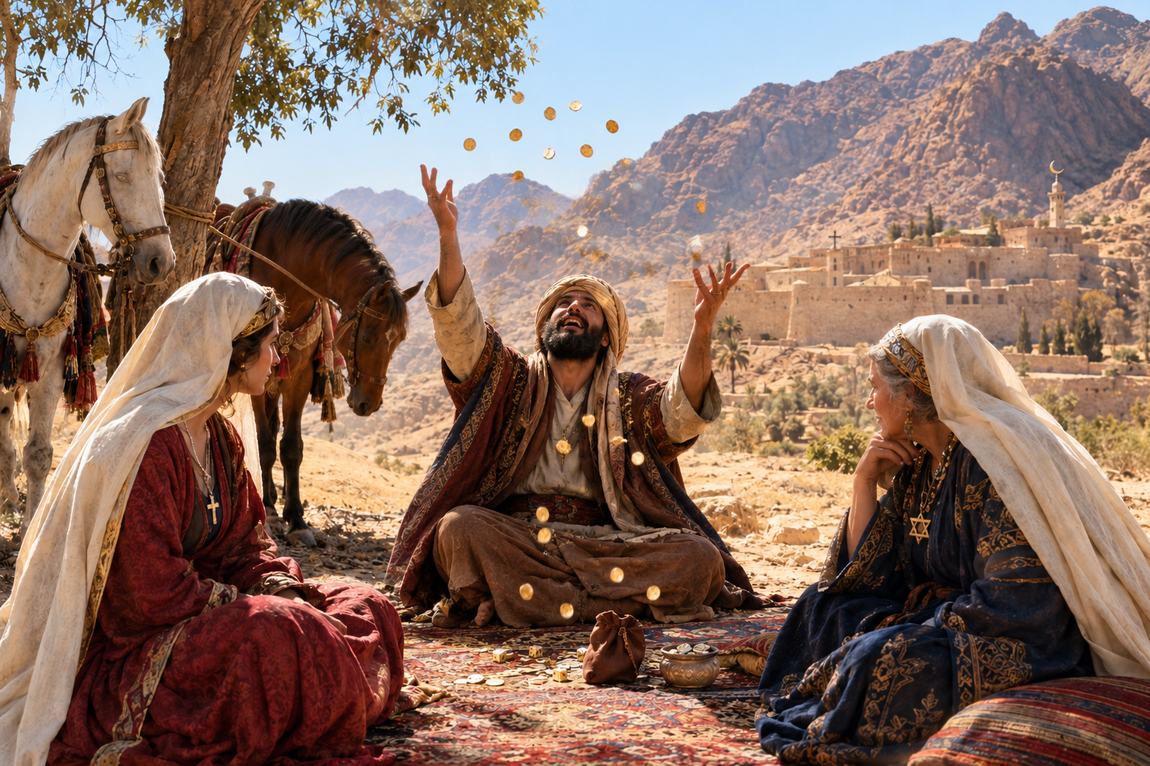
The seventh century. The mixed inhabitants of what we now call the Middle East are caught between the rapid advance of the Arab Empire under the young and audacious Khalid ibn al-Walid, welcomed by Jews and Christians alike who no longer accept Byzantine rule, and the withdrawal of that empire under the ageing Eraklio. As the two collide, Sofia and Amir, Rebecca and Demetrios find love, friendship, themselves and peace, having first got past the religious, social and political obstacles of the epoch and Sofia's father's gambling.
Two empires on the same ground, and a poem carried between them.
Everything turns on the Monastery of St Catherine of Sinai, the one place held sacred, and held to be a sanctuary, by all three monotheistic faiths. The argument of the film is very simple. The three have lived side by side before, therefore it can be done. Nobody enjoys being preached at, so the argument travels inside an adventure.
Below the monastery of St Catherine, where all three faiths met.
I was living in Rome at the time, friendly with a great many people inside the institution at the centre of one of these faiths, in a city where history is not a subject but a neighbour. History moves in cycles. So I thought: why not write about a time when there was peace among all of them, since what once was could be again. Then I came across the Monastery of St Catherine of Sinai, and it more or less handed me the story. With it came the possibility of gathering the leading figures of all four traditions, Catholic, Orthodox, Muslim and Jewish, in a single room.
Because the film speaks for all three faiths at once, it needed all three to agree, which is not something one normally asks for. It got them.
From the Catholic side, a letter from Cardinal Walter Kasper, President of the Pontifical Council for Promoting Christian Unity, saying the Holy See could give the project every support, and the active backing of Monsignor Giulio Dellavite at the Congregation for Bishops, with interest from the Pontifical Councils for Culture, for Social Communications and for Interreligious Dialogue. From the Muslim side, a letter of support from Dr Mustafa Cerić, Grand Mufti of Bosnia. From the Jewish side, an endorsement from Rabbi Awraham Soetendorp, and the approval of the Chief Ashkenazi Rabbi of Israel, obtained through the President of B'nai B'rith in Rome. From the Russian Orthodox Church, a letter from the Moscow Patriarchate's Department for External Church Relations, then headed by Metropolitan Kirill, who shortly afterwards became Patriarch of Moscow and All Russia. The letters date from 2007 to 2009.
The plan was to premiere it at the Campidoglio with the senior representatives of all three faiths in the room together on big screens, and the unprecedented event streamed worldwide. On reflection, getting a cardinal, a grand mufti and a chief rabbi to back the same film was the most complicated, and oddly the easiest, thing I have ever put together.
Roulette
Television series. Written by me. Pitch, first episode, season arc and writer's room bible.
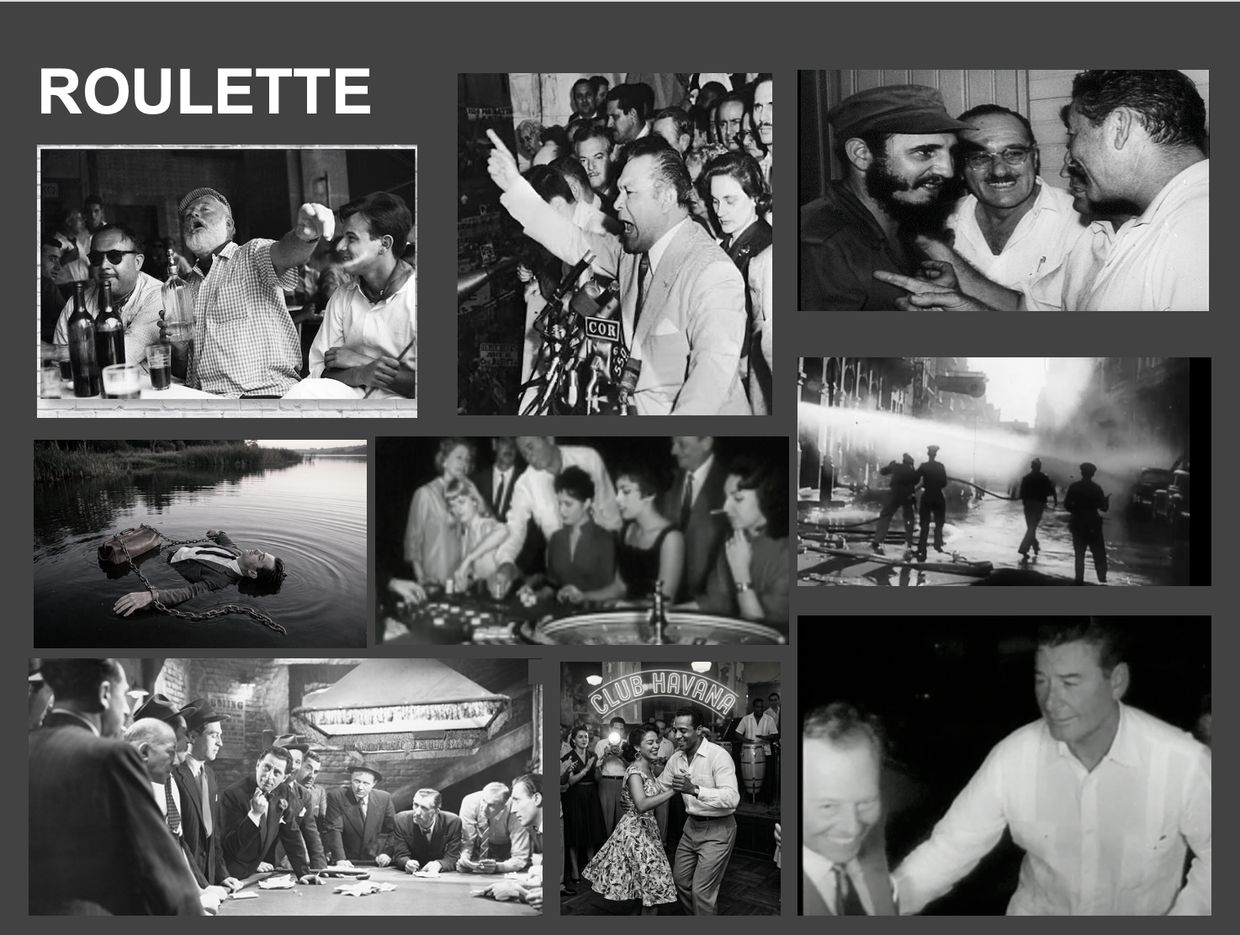
Cuba in the fifties, with the revolution coming. Errol Flynn, Hollywood legend, and the film producer Victor Pahlen are pulled into the seductive and treacherous world of mafia-run casinos, bought politicians and rising revolutionaries, all while chasing their own impossible dream of making a film that argues with history.
A historical crime drama of espionage, Hollywood glamour, conflicted characters and political intrigue, inspired by true events. Two outsiders caught between Batista's dictatorship, the equivalent of today's CIA, the American mafia and Castro's rebels, gambling with forces very much larger than themselves while their ambitions and their vices close in. Narcos meets Boardwalk Empire with something of the charm of Argo, against the last golden days of Havana.
Havana at the end: the casinos, the clubs, the artists, the mafia, what was to become the CIA, Batista, and Flynn.
Victor Pahlen was my father, and he was a serious gambler. He did make that film, Cuban Story, with Errol Flynn, in Cuba. I finally wrote it in 2025, which is either a very long time to sit on a story or exactly the right amount.
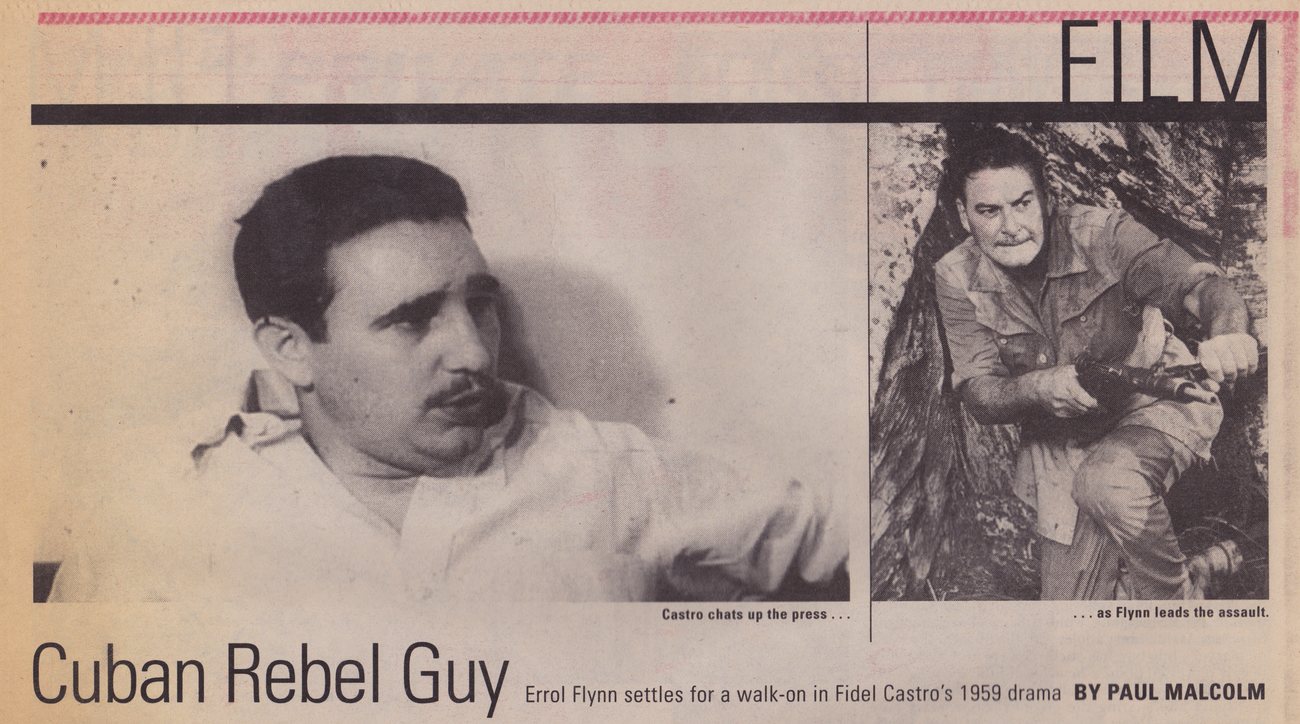
The Los Angeles Times, on my father's 1959 Havana documentary and Errol Flynn's part in it.
Cuban Story
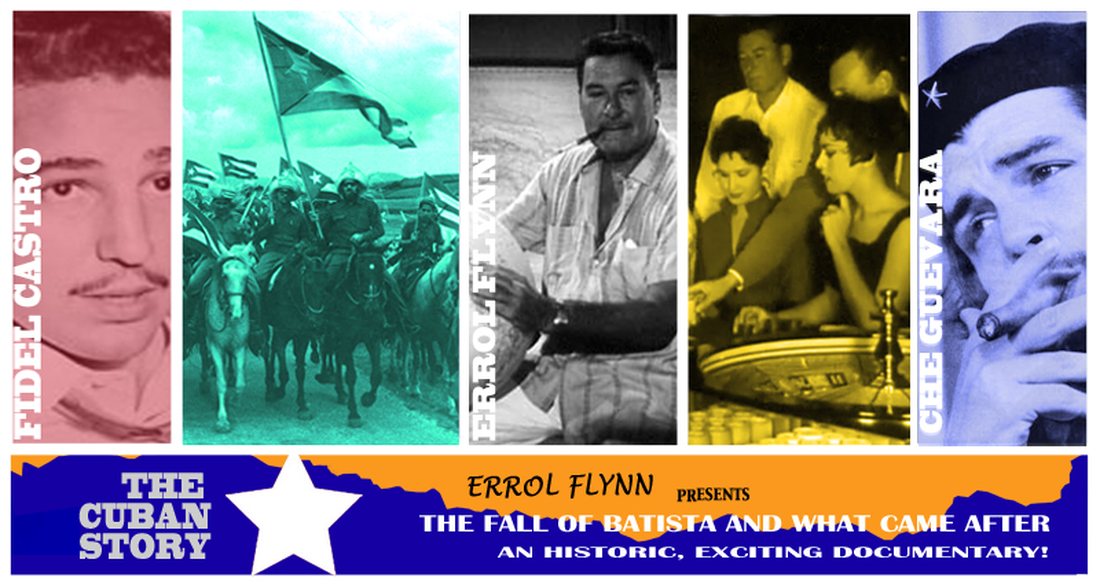
Documentary, fifty minutes. Produced by my father in 1959, released then as The Truth About the Fidel Castro Revolution. Owned by me.
He made it in Havana, where he was living with his friend Errol Flynn, and shot it as Castro was coming to power. Flynn narrates it on screen. The footage is extraordinary, featuring Che, Castro, Batista and his henchmen. It is the film covered by the Los Angeles Times piece above, and it received a great deal of press.
It has been licensed by ARTE, ZDF and a long list of video companies. There was a great deal of interest for that particular archive, and I own this unique historical piece, some of which is to be used in Roulette.
The original poster.
The Piglet
Feature film. Original screenplay, written by me.
Nothing pleases me more than making my friends laugh. If they fail to laugh, I laugh on my own at my formidable jokes, and one day all of that produced my only outright comedy.
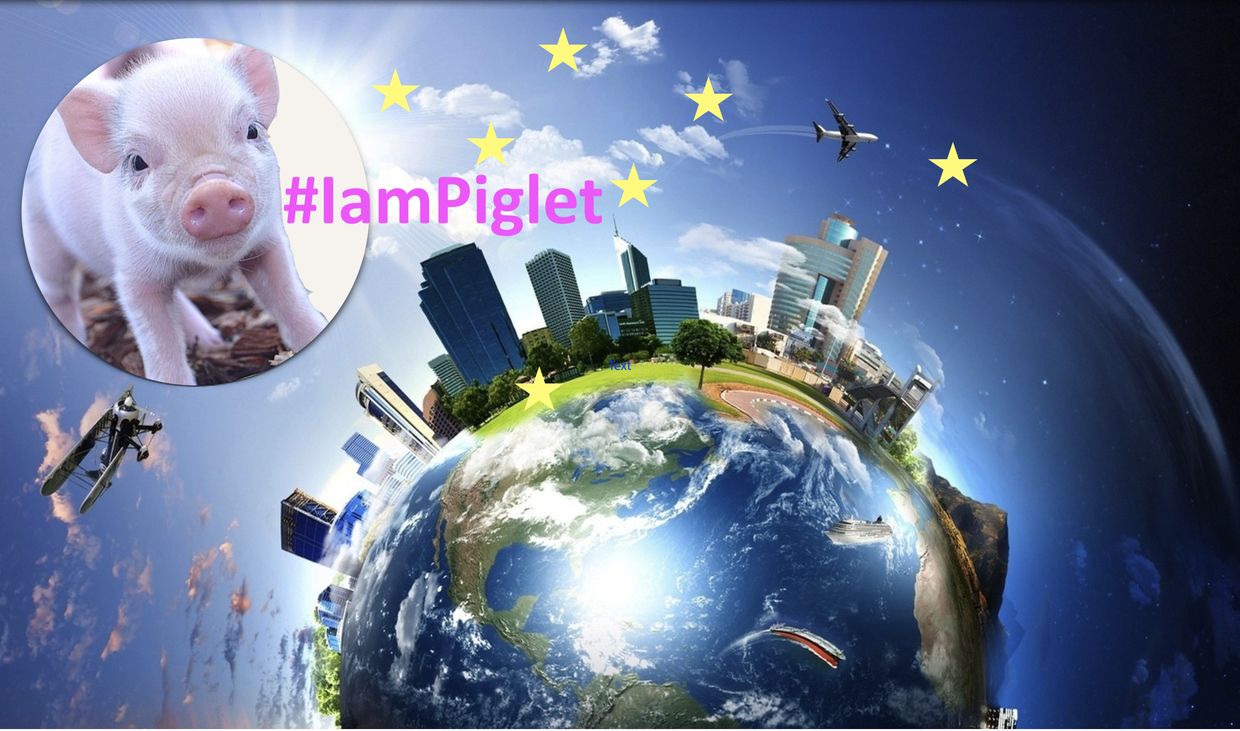
A brilliant piglet escapes his overprotective celebrity owner, then escapes the scoundrels who kidnapped him for ransom, and sets off across five countries, becoming the world's foremost influencer and, in the process, a global animal rights celebrity. Millions follow the journey. Meanwhile the humans who love him are made to face attachment, the courage to let go, and what actually constitutes love.
The Piglet travels the world.
A live-action and AI hybrid family comedy-adventure built around a breakout non-human lead and a thoroughly universal emotional journey. Warmth, wit and spectacle, in a tone that plays equally to children, to their parents and to international audiences. Event family entertainment with franchise architecture underneath it, designed to hold its value across theatrical and streaming.
In 2024 it attracted a major director and came close to production. The pig is currently available.
Siddhartha: The Warrior Prince
Novel. Written by me, in English. Published in French, German and Spanish.
When I was very small, living in Nice with my Russian grandmother, my Austrian mother told me stories about the Dalai Lama and about mental control. They made enough of an impression that many years later, after my years in Japan, they turned into a book.
It is a deeply researched account, in literary form, of the first part of the Buddha's life. The research was done with Professor André Bareau of the Collège de France, whose educated hypotheses opened a genuinely new perspective on what may actually have happened. It started life as a script, also became a book, and has outlived every obstacle that tried to stop it.
Siddhartha: The Warrior Prince is a work of historical fiction that restores flesh, bone and moral complexity to the man behind one of the world's most enduring philosophies. It is not a spiritual parable. It is an epic novel of a warrior prince navigating rival kingdoms, caste warfare, political intrigue and intimate human love, driven by grief, by intellectual hunger, and by the relentless question that defines the man: why?
It is also the book everyone assumes Hermann Hesse wrote.
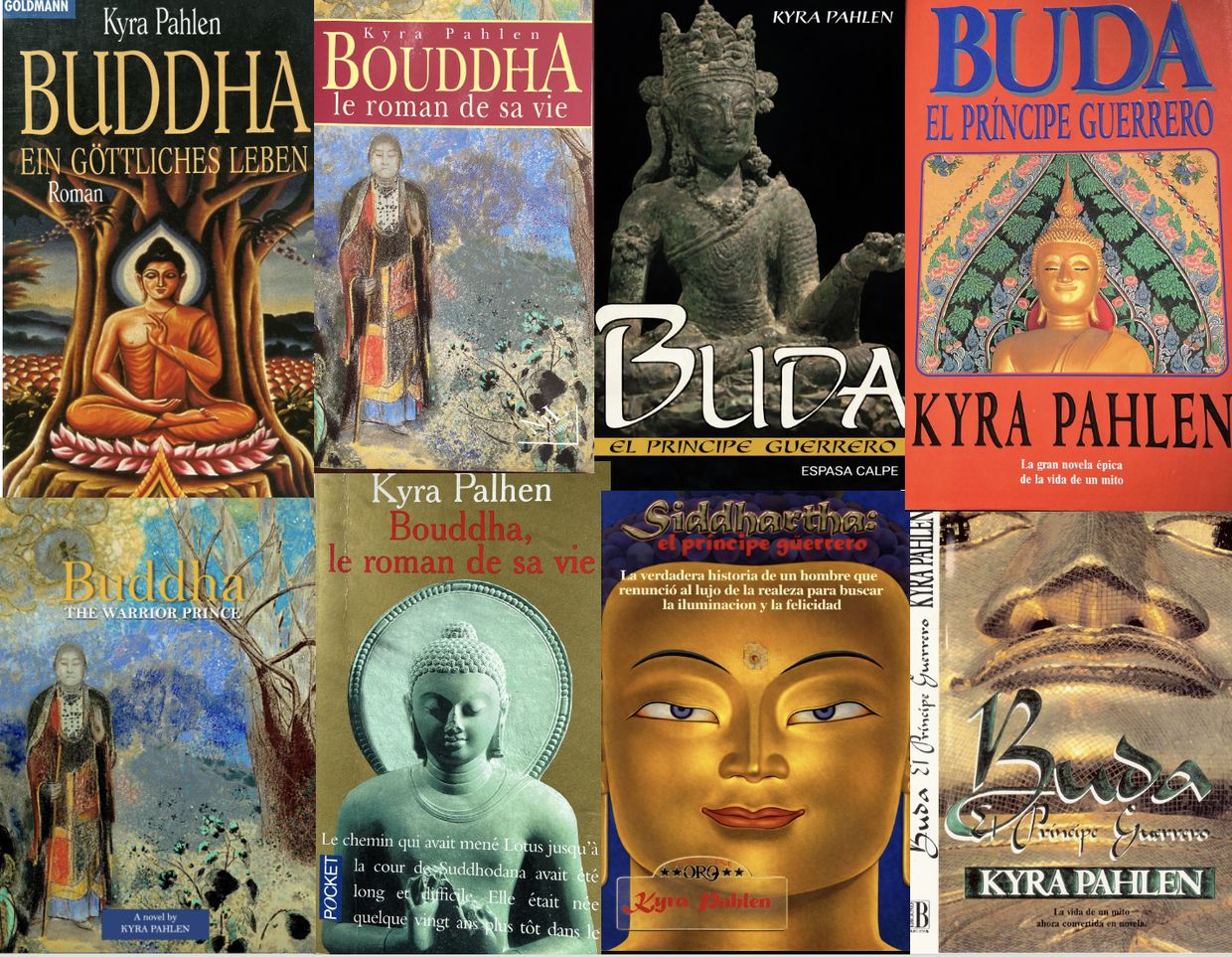
Editions in German, French and Spanish.
It was published by Nil Editions, Laffont and Pocket in France, Bertelsmann in Germany, and Ediciones B, Planeta and Espasa Calpe across Spain and Latin America, and it sold very well. In the United States it received the Society of Writers UN Award of Excellence, whose previous recipients include Norman Mailer, George Weidenfeld, Mikhail Gorbachev, Gloria Steinem and Erica Jong. Tricycle ran a long interview about it.
However, by a strange twist of fate, the original English version was never published at all. I would like to publish it now, because I think the time is right. A film based on the script is also being considered.
Crypto: L'argent du futur
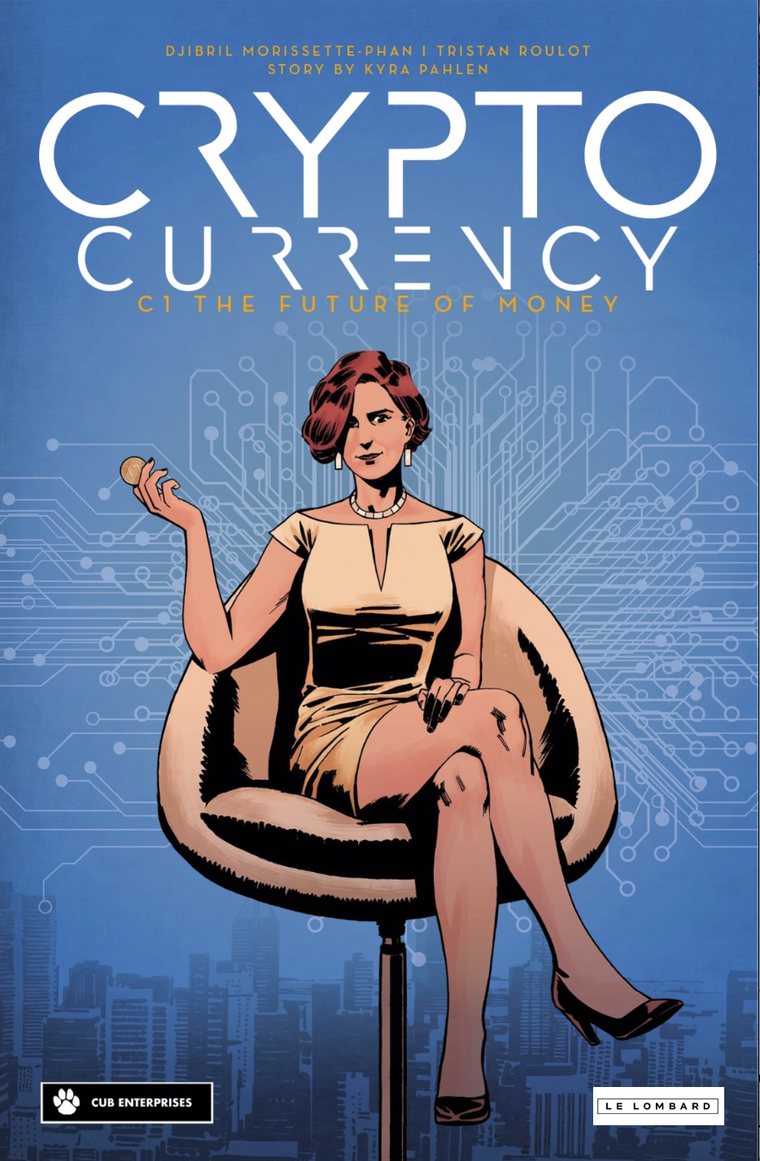
Graphic novel. Original story by me, script by Tristan Roulot, art by Djibril Morissette-Phan. Published by Le Lombard, and in English as Cryptocurrency: The Future of Money.
By 2018 I was fully embarked on LingoZING, the education app: audio laid over comics, interactivity, and any subject at all taught inside a context compelling enough that people actually retain it. Or so I preached. It seemed only fair to test the claim on myself.
The English edition.
Everyone was talking about crypto and almost nobody could explain it, which made it close to the hardest subject available. So I built the story around someone I know whose adventures in cryptoland had been highly informative, and, having by then written scripts, a book and a film, I thought I might as well try a graphic novel too.
Le Lombard published it. It won the 2019 Prix Lycéen, awarded by the French ministers of the economy and of culture, for the best non-traditional tool for teaching economics. So the claim held, which was a relief.
Cats & Girls
Webtoon. Written by me.
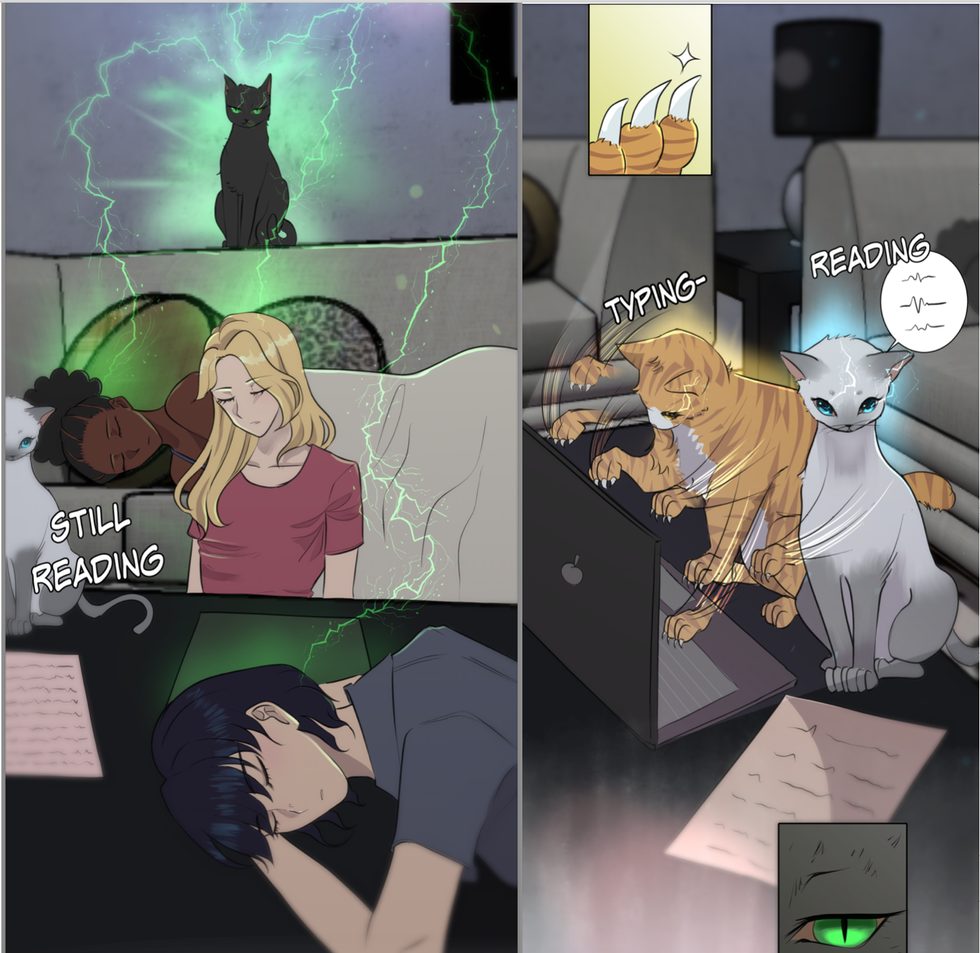
Then, purely to entertain myself, I made my first webtoon. Three girls who want to be entrepreneurs without the faintest idea what that involves, each with a magic cat. The girls make a mess of things all day. At night, the cats quietly undo it.
The night shift.
And a good deal more, further back.
Panda and Krazed the Koala
An R-rated animated road movie set in post-nuclear Australia. Yes, really.
Belphegor, aka The Neophyte
Treatment, written for Solomon International Pictures.
Which Way is West
Treatment. Taken into development discussions at Disney Italy.
For the Love of Penny Whistler
Screenplay, written for Onetake Pictures in the United Kingdom.
The Taming of the Shrew
Adaptation, written for SIE.
Eye of the Widow
Associate producer. With Ben Cross and F. Murray Abraham, directed by Andrew McLaglen.
Posers
Set up at Miramax with Penelope Spheeris attached to direct.